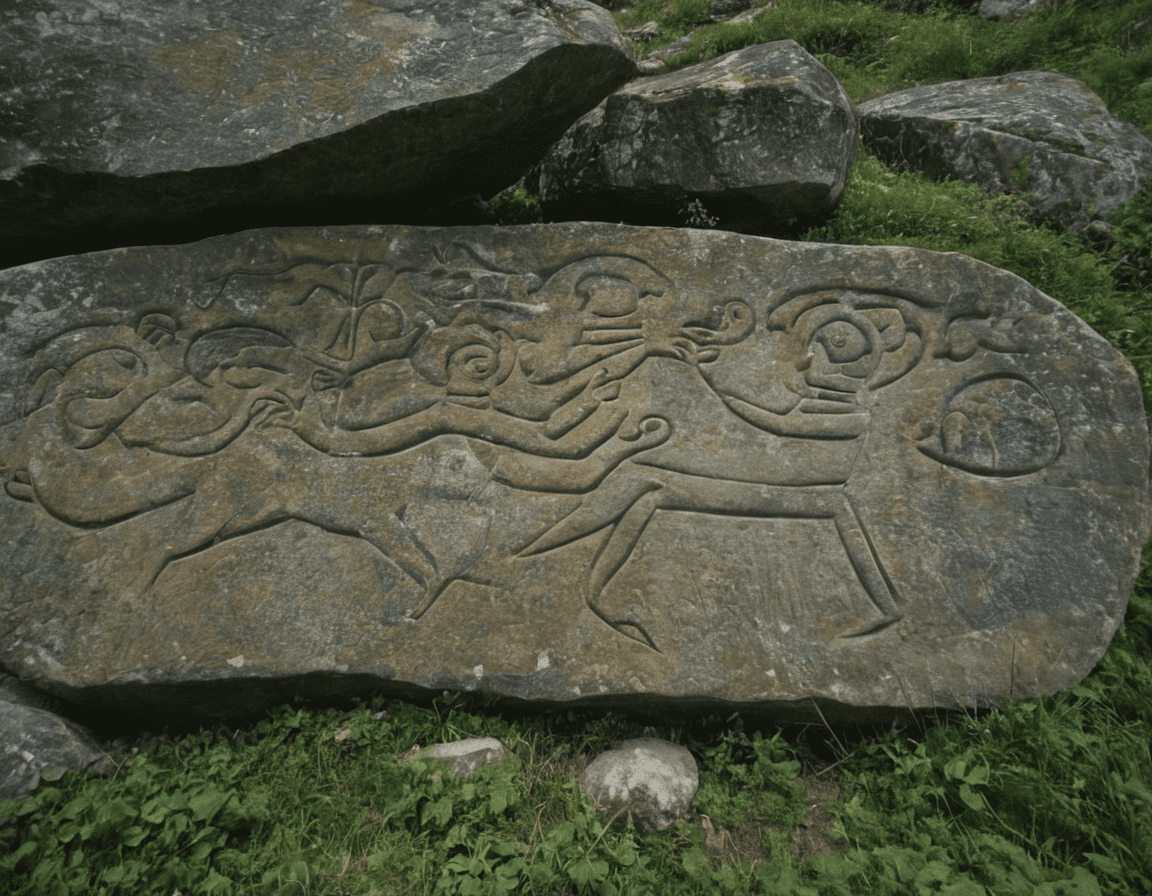
From Marseille to Chiò d'la Vacio
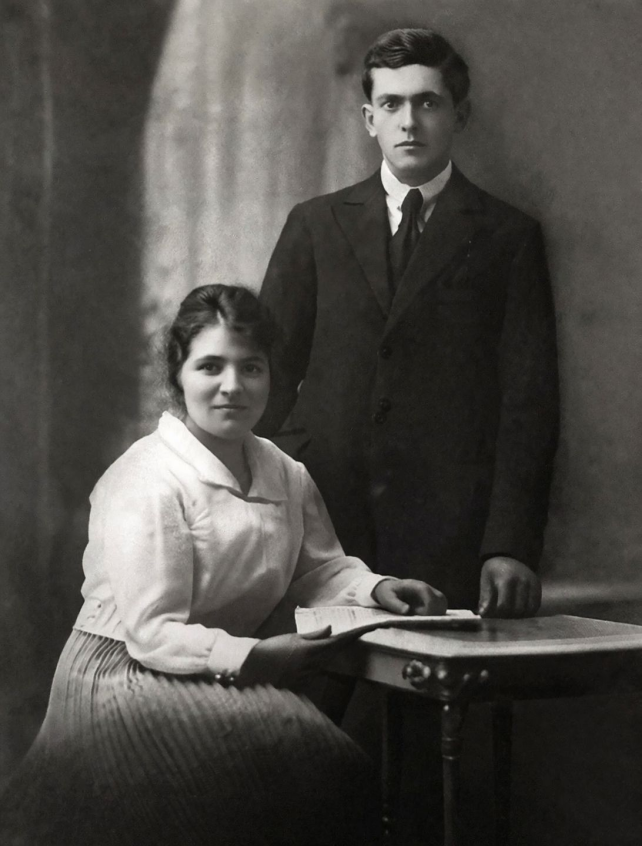
Story of a Grandmother
I. The Roots
It is 1896 when Maria comes into the world in Marseille, amid the briny scent of the Old Port and the hum of the markets along the waterfront. Her first cries are lost in the narrow working-class alleyways, far from the benevolent gaze of polite society. The city is alive, chaotic, fragrant with fish and spices, with warm bread and tar. A place that does not ask permission to exist.
Her mother, Anna, is little more than a girl. Young, beautiful, and alone. A housekeeper for a wealthy Marseillais family, she finds herself raising Maria amid silences heavy with disapproval and the scandalised whispers of the other servants. Being an unmarried mother, in those years, is an almost indelible stain, a shame hidden behind sober front doors and lace curtains. On Sunday mornings, while the masters went to church with wide-brimmed hats and white gloves, Anna hung back with the child in her arms, trying not to meet anyone's eyes.
And so, for reasons of the heart and scarcity of means, Anna makes a heartbreaking decision: she entrusts Maria to her own parents, the maternal grandparents. The parting takes place on a late September morning, in front of the station. Anna kneels before the child, smooths her hair with her fingers, says something in a low voice that Maria does not understand but feels with her whole body. Then she lets her go. The child crosses the Alps and reaches the harsh, silent mountains of the Val Varaita.
Her new home is Chiò d'la Vacio — or, as it is called in Italian, Chiolavaccia — a small hamlet lost near Rore di Sampeyre. The wind whistles through the stones of Pramiran, the highest meadow in the valley, and summer is only a brief sigh between long, snowy winters. Everything here is different from Marseille: the silence first of all, a silence that fills the ears of a child accustomed to the noise of the harbour. Then the cold, the enormous stars, the smell of hay and stable that seeps into everything, even into dreams.
The grandparents are people of few words and many gestures. The grandfather has hands like oak bark; the grandmother has a way of looking that says everything without opening her mouth. They welcome Maria without ceremony, show her the bed that will be hers, put a bowl of hot soup in front of her. It is their way of saying welcome.
There Maria grows up wild and industrious. She attends the multi-grade class until the age of ten, in a damp schoolroom where the cold makes the fingers go numb and the smell of burning wood mingles with that of chalk. The teacher is a slight woman with round glasses who never smiles but never shouts either, whom Maria will remember all her life for that ability of hers to explain difficult things as if they were simple. She learns to read and write almost by miracle, she learns Piedmontese and the patois; the days are full.
She is still a child when she is already minding the cows, leading them to graze on the steep slopes like an experienced shepherdess. Her small hands quickly learn to milk, to make cheese, to sew and to hoe the vegetable garden. The sun darkens her skin, hard work tempers her gaze. She plays the harmonica, learned alone, by ear — she carries it in the pocket of her apron and takes it with her to pasture. She sits on a flat stone she knows by heart, the one with the moss on its north side, and draws out those slightly out-of-tune but heartfelt notes. The cows graze peacefully, the wind carries the music down through the valley, and for an hour Maria is not the child who was given away, not the daughter of the unmarried mother; she is only herself, with her harmonica and the sky above.
* * *
Only once, in all that time, does she receive an unexpected visit. It is a July morning; the sun is already high when a stranger with an awkward air climbs all the way up along the path to the hamlet. He wears a white shirt with a starched collar, out of place among those rocks and that tall grass. It is her father. Maria watches him from the threshold without drawing closer, the way one watches an animal one does not know: with curiosity and wariness at once.
He says he comes from Perosa — perhaps Villar Perosa, perhaps Perosa Argentina, who knows — and for a few hours fills the room with his unfamiliar voice. He brings with him a small gift: a ribbon of blue silk and a handful of sweets wrapped in tissue paper that Maria will smell for days before eating them. He has lunch with the grandparents in silence, answers questions that no one asks aloud. Then he says goodbye, shakes hands with the grandfather, barely grazes Maria's head with a gesture that wants to be a caress but is too uncertain to be one. Then he leaves, and Maria will never see him again. She will know nothing more of him, like a river that vanishes into the rock.
That night Maria pulls the blue ribbon from the drawer, ties it in her hair and looks at herself in the small mirror hanging in the kitchen. Then she takes it off, folds it carefully and puts it back in the drawer. She will never throw it away, but she will never wear it again.
The years pass with the slowness and certainty of the seasons. The grandmother dies in a particularly harsh winter, in the dead of night, without disturbing anyone — just as she had lived. The maternal grandfather is left alone. He grows old, fragile as a dry branch. His hands can no longer grip the scythe, nor his step keep up with the cows. He speaks less and less, eats less and less, spends his days sitting by the window staring at the mountains as if waiting for them to tell him something.
Anna, now settled, comes back to take her daughter and brings her to Marseille. The departure from Chiò d'la Vacio is another silent tearing. Maria says goodbye to the grandfather holding his hands between hers, just as he had held hers when she had arrived as a child. Then she picks up her bundle of belongings — not many — and walks down into the valley without looking back. She knows that if she turns around, she will not leave.
II. The Girl from Marseille
Maria, very young, resumes her studies in France. She learns French to perfection, until she speaks it without an accent, like a true Marseillaise. It is not difficult for her: languages slide off her like water, perhaps because as a child she had already learned that words change but things stay the same. She too is introduced into service with the same family for whom her mother works. Her days flow once more between elegant dining rooms and sweltering kitchens, between spotless uniforms and front doors that close with a dull thud.
The lady of the house is an austere woman with always-perfect hair and a way of looking that weighs people the way one weighs flour. With Maria, however, she is different. Perhaps she senses in that quiet girl something that goes beyond the job. She lends her books, on Sunday afternoons. Small things — a novel, a short story. Maria reads them at night, by the low candle, seated on the edge of the bed. It is her way of travelling when her body cannot.
For a long time she leaves almost no trace in family memory. Her girlhood life wraps itself in a thick silence, made perhaps of dreams set aside and desires postponed, of solitary walks along the seafront — where the wind carried the same smell of salt she had breathed as an infant — and of the odd tear quickly wiped away. Marseille is a city that embraces you and forgets you in the same moment, and Maria learns to let herself be embraced without expecting to be remembered.
She has a friend, in those years. Her name is Hélène; she works as a seamstress in a workshop near the port. They meet on Sunday mornings at the neighbourhood fountain, spend an hour talking about everything and nothing, then each goes her own way. They never write to each other, never seek each other out during the week. But that Sunday morning is like a breath of air, a moment that belongs only to them, outside of service and expectations. When Maria leaves for Toulon, they say goodbye with a simplicity that almost hurts more than a long embrace.
* * *
Then, one summer, everything changes. During a brief holiday in Sampeyre, among the mountains of her childhood, Maria meets Antonio's gaze. He was born a year after her, in 1897. He has calloused hands and laughs like someone who knows the value of bread. It is at the feast of San Peyre, in June, when the village fills with people come from the nearby hamlets and the square smells of fried food and wine. The band is playing, children are running about, the old women are sitting in a row on the church steps.
Maria is standing by the fountain drinking when she hears someone behind her say, with that mountain cadence one never forgets: 'The water from this fountain is the best in the valley. Everyone says so, but no one believes it until they taste it.' She turns. Antonio looks at her with a slightly crooked smile, as if he is not entirely sure of what he is doing. Maria does not answer straight away. Then she says: 'I've heard better opening lines.' And he laughs — that wide laugh that will always seem the same to her through all the years to come.
They see each other two more times that week. The third time they walk together up to a meadow above the village, from where the whole valley is visible. They talk about everything: about Paris, which Antonio has never seen but imagines large and chaotic; about Marseille, which Maria describes as a city that smells of salt and freedom; about the mountains they both know by heart like the palms of their hands. When they come down, it is nearly dark and the stars are beginning to light up one by one above them.
They decide to marry. But Maria now lives and works in France, and Antonio, for love, follows her across the Alps. The wedding does not take place among the mountains of Sampeyre, but in Toulon, near the city where Maria was born. They marry in 1922. She is twenty-six; he is twenty-five. The bells of Toulon ring out in celebration, and the wind coming from the sea carries with it the scent of salt, of magnolias, and, far, far away, a memory of freshly cut hay. Anna is there, wearing her good dress and eyes that she tries to keep dry. It is the first time Maria has ever seen her cry.
III. Paris
One way or another, the young couple moves to Paris. Perhaps they are drawn by the energy of the great city, perhaps by the promise of better work, perhaps simply by the courage of those who want to start over, away from the family gaze and close to the future. They rent a small apartment on the fourth floor of a building in the eleventh arrondissement, where the noise of the trams mingles with the voices of the local markets and the smell of warm bread rising from the boulangerie on the ground floor. The stairs creak, the ceiling is low, but from the living-room window you can see the rooftops of Paris turning golden at sunset.
Maria arranges the apartment with care and very little: a white cotton curtain at the window, a blue faïence vase on the sill, the wedding photograph hung near the door. Antonio hangs his work tools on a hook in the entrance hall, as if they were trophies. Everything in its place, every place with its thing.
The following year the first daughter is born. They call her Marie, like her mother but in the French way. The room fills with nappies hung out to dry, with makeshift cradles and weary laughter. Antonio comes home in the evening with his hands dirty from work and finds them both asleep, and for a moment the world seems perfect. He spends half an hour sitting in silence listening to them breathe, without turning on the light.
These are good years. Antonio works as a boiler-maker — a trade that requires patience and precision — and comes home with coal dust under his nails and the satisfaction of someone who knows how to do something useful. In the winter months, when Paris shivers with cold, his name is sought with respect in the bourgeois neighbourhoods. Maria works, saves, learns the city neighbourhood by neighbourhood. On Sunday mornings she goes to the market at Place d'Aligre with the child in her arms and learns the vendors' names, learns to choose the right fruit, to bargain without losing her dignity.
* * *
But happiness is a delicate flower. In 1927 a second daughter is born. They call her Micheline Lucie. In the first days she seems a child like any other, but soon the first signs of fragile health emerge. Her breathing is too faint a whisper, her cheeks never gain colour. The doctors do what they can, consult among themselves with a gravity that is itself an answer, but in those days medicine has its hands tied. The little girl struggles for six long months, then goes out like a candle in the wind.
The grief is immense, a millstone crushing the chest of Maria and Antonio. But what happens next makes that agony even more atrocious. Because of a strike by the funeral services — those days when Paris grinds to a halt, the workers fold their arms and no one collects the living or the dead — little Micheline Lucie must remain at home. Long days, perhaps three, perhaps four. Her crib becomes a silent altar. Maria spends hours beside her, unwilling to leave, talking to her in a low voice as if she could still hear. Antonio paces back and forth across the room, fists clenched, eyes dry but full of a helpless rage. The little Marie, four years old, understands that something is broken and cannot be mended. She does not cry, does not ask. She sits in a corner with her rag doll and waits.
That pain within pain will mark them forever. One does not forget a child who dies, and one does not forget those days of forced waiting, with death sitting in the living room. Maria will become more silent, she will always carry a veil of sadness in her eyes. Antonio will take refuge in work, or in that bottle of wine he opens some evenings and finishes too quickly. But they will stay together, because shared grief sometimes binds more than joy does.
* * *
A few years later. It is 1930. The shadow of Micheline Lucie is still there, crouched in a corner of the Parisian apartment, but time has begun its slow work of smoothing. Irene comes into the world, wanted perhaps also to ease that grief a little, to fill the silence again with a living cry, to start believing once more that life can win over death. Little Irene has strong lungs and rosy cheeks. She cries as she should, eats as she should, sleeps as she should. The doctors examine her and smile. Maria holds her breath for the first months, checks every night that the small chest rises and falls, then little by little she learns to breathe again. Antonio holds her in arms that have built boilers and that are now learning to be as gentle as feathers.
Nonna Maria, now in her mid-thirties, has also found new work. She has become a housekeeper, like her mother Anna before her. Perhaps blood does not lie; perhaps certain skills pass from mother to daughter like secret recipes. She works for a well-off family in the sixteenth arrondissement, where the rooms are large and the furniture polished to a mirror shine. She rises early in the morning, straightens the house, puts order into other people's disorder. She speaks impeccable French, with just what remains of a Marseillais accent that someone, from time to time, notices with a smile.
She spends the evenings with Antonio and the girls. Little Marie — now eight years old and doing well at school — helps keep an eye on Irene, the little sister who arrived like a second spring after a long winter. The apartment fills again with voices, footsteps, life. The grief has not been forgotten, but it has been put in a separate room, the kind that opens only occasionally, in moments of silence. It is the hard-won peace of those who have learned to treasure every good day as if it were a gift.
IV. The War
The 10th of June, 1940. From the balcony of Palazzo Venezia, Mussolini announces Italy's declaration of war on France. The news spreads like wildfire. In Paris, the air that until yesterday had seemed almost normal suddenly becomes heavy, unbreathable. People stop in the street to listen to the radio from the sets left on in windows, then walk away in silence, as if they no longer know where to go.
Antonio listens to the radio with a hollow face. He was a soldier on the front line during the Great War, saw the horror of the trenches, was captured and deported to a prisoner-of-war camp in Germany — those memories have never left him. At night, even now, he sometimes wakes drenched in sweat, with his eyes wide open in the dark. He rarely speaks of those years, almost never. Sometimes Maria finds him sitting by the window at three in the morning with a glass in his hand and a gaze that has gone far away, and she knows that at that moment he is not there, not with her, not in that Parisian apartment. He knows what war means. He knows what it means to be the enemy.
By now the whole family is naturalised French. Their papers are in order, they speak the language, they pay taxes. But blood cannot be erased with a sheet of paper. Antonio fears that Italians will be marginalised, that they may suffer serious consequences. In Paris the hysteria begins to mount: hostile words appear on the walls of the neighbourhood that Maria pretends not to read; neighbours look at one another with a sudden wariness; some stop saying hello. One morning their daughter Marie comes home from school with red eyes. Her classmates have told her she is Italian — as if it were an accusation.
Antonio makes a decision. It is not a choice; it is an act of survival. They must go back. They must return to Italy, to those mountains that will perhaps, at least for a while, remain beyond the reach of the cannons' thunder.
Nonna Maria listens and nods. For the third time in her life she is forced to start again. She does not protest. Perhaps inside she is tired; perhaps she has learned that life does not ask permission. In two days she empties the apartment, sells what can be sold, gives to the neighbours what remains. She takes one last look at the white curtains at the window, the blue faïence vase on the sill. She leaves them there. There is no room for vases in moments of flight.
The eldest daughter, Marie — now almost a woman, having just turned eighteen — has just finished school. She has found a job in Paris, no small thing in those times. She does not want to hear of going back to Italy. Paris is her city, her life, her future. She argues, cries, despairs with the force that eighteen-year-old girls have when they know they are right. With no small sadness, Maria and Antonio leave her in Paris. The embrace at the station is heart-rending, the kind that sticks to you forever. Then the train departs, and Maria watches from the window as her daughter grows smaller and smaller on the platform, until she is only a distant dot, until she disappears entirely.
The journey towards Italy is long and laden with dread. The train crosses a France already holding its breath. When they arrive at the station in Modane, at the border, the French gendarmes make all the passengers returning to Italy get off. They do not ask politely. They shout orders, push, separate families with indifference. Then they begin to collect the documents — one by one. They do not stamp them, do not check them. They tear them apart with fury, throw them onto a pile that is already more than a metre high. A monument of shredded paper, of destroyed identities, of lives that from one moment to the next become nothing.
Maria watches that mountain of white fragments and loses her breath for a moment. Her French documents — earned through years of work, through a language learned, through loyalty demonstrated — are torn apart before her eyes and thrown away like rubbish. For a moment she feels she is nowhere, that she belongs to nothing. Neither Italian nor French, neither here nor there. Only a woman on a platform, with empty hands. Antonio clenches his fist but says nothing. He knows that one word too many could cost them dear. They simply file past, one after the other, with nothing in their hands but their own skin.
* * *
For several months there is no news of Marie, the daughter left behind in Paris. Letters go missing, telephone lines are monitored, the borders are a wall. The thought of having left her in a city at war, of not knowing whether she is alive or dead, whether she eats or goes cold, gnaws at them day and night. Antonio wakes even more often; Maria prays in silence, clutching an old handkerchief in her hands. Every morning that passes without news is one more day of darkness. Little Irene watches them without understanding, with those large eyes that see everything and comprehend nothing.
Then, one spring afternoon, a letter arrives. A few lines, written in haste on a sheet of recycled paper, in a handwriting Maria recognises before she even opens the envelope. Marie is well. She still has her job, still lives in her apartment, eats, sleeps, breathes. The letter says nothing more — perhaps there is nothing more to say, or perhaps one cannot say more — but for Maria and Antonio it is as if someone has reopened a window onto a world they believed lost.
V. The Land
With the savings of a lifetime — put aside working as a boiler-maker and as a housekeeper, saved penny by penny — they buy a small farm in the lower Val Varaita. It is not much, but it is theirs. Four stone walls, a piece of land, a well that groans in the early morning. A place where they will be able to live independently through the produce of the land. For the first time in a long while, they breathe.
The farm is not in bad condition, but it needs care. Antonio works from dawn to dusk to put it right: the roof, the stable, the wall enclosing the vegetable garden. Maria cleans, arranges, sows. Her hands rediscover gestures she thought forgotten: the way to hoe without wasting energy, the way to tell dry soil from damp, the way to know when to harvest without waiting until it is too late. The body remembers even when the mind does not.
They also buy a cow. They call her Bianca, for the snow-white patch on her muzzle, and Nonna Maria teaches little Irene — now ten years old and watching everything with wide eyes — to take her out to pasture. Just as she herself did as a child, when she lived in the mountains at Chiò d'la Vacio. She shows her how to choose the best grass, how not to lose sight of the animal, how to be home before dark. Irene listens seriously, nods, then goes up to the meadow with Bianca and sits on the same flat stone on which her grandmother had probably sat forty years before.
Maria teaches her to tend the vegetable garden: the tomatoes, the courgettes, the beans. She shows her how to hoe without hurting herself, how to recognise weeds, how to water at the right time. She teaches her to collect eggs from the henhouse without frightening the hens, to light the fire in the early morning when it is still dark outside, to make bread on rainy days when one cannot work outdoors. Irene learns quickly. Perhaps something of the grandmother's blood runs in her veins too.
Outside, it is wartime. But here, at the bottom of the valley, the war arrives muffled, filtered by distance and mountain. It arrives in news brought by those who come down from the villages, in draft postcards, in absences that multiply. One evening Antonio comes back from the village with a closed expression, and Maria understands that he has heard something he cannot tell her while Irene is present. She waits until the child is asleep, then he tells her. Roundups, deportations, roads under guard. The world outside is no longer the place they knew.
VI. The Return and the End
A few years pass. The war is over, but the wounds remain. In the small farm, Antonio begins to feel tired. He is no longer the robust man who built boilers in Paris. His body, after so much toil and so many sorrows, sends the first signals of surrender. A cough that will not go away, a breath that grows short, legs that no longer hold him as they once did. Maria watches him with that silent attentiveness she has always had for the people she loves — the kind that notices changes before they become obvious.
They decide to return to the family house in Sampeyre, the village where they had met so many years before, during that brief holiday that had changed their lives forever. The house has stood empty for years; it smells of damp and the past. Maria reopens it window by window, letting in the air and the light. She washes the floors, beats the mattresses, airs the rooms. She does what she has always done: takes what she finds and makes it into a place where one can live.
But miracles, sometimes, do not come. At fifty-nine, Antonio dies. It is 1957, if one counts correctly. He dies on a June morning, with the sun coming through the shutters and the scent of hay rising from the valley. Maria holds his hand, as she always has. He looks at her one last time with those eyes that had laughed by the fountain at Sampeyre thirty years before, then closes them. End of the story. At least, of their story together.
Maria stays motionless for a long moment, with his hand still between hers. Then she gets up, goes to the window, looks at the mountains. She does not cry, not yet. The crying will come later, at night, when the house is silent and she is alone with that enormous absence. For now, there is work to be done. There is always work to be done.
* * *
The daughters are now both married. Marie, who stayed in Paris, has built a career, built a life, married and had a son, little JP. Irene, also married, has remained in Italy with her family. Nonna Maria still feels up to the mark. She is not a woman for armchairs and embroidery; she is not made to wait for death to come and find her in silence. She is over sixty, her bones weigh on her, but her spirit does not.
So she picks up the old correspondence with her French friends — those she has always maintained despite the war, despite the separations, despite everything. And some of them write back. They call her as a housekeeper dans le Midi, as she used to call it with that smile that lit up her face. The sun, the sea, the palm trees, the sun-baked streets. Another life, another chance. Nonna Maria packs her bag — small, as always — and sets off again. She will leave almost no trace for months, then a hastily written note will arrive: 'I am well, don't worry.' And that is all.
VII. The Final Return
Until she reaches retirement age. At a certain point, perhaps tired, perhaps because her body asks for rest, she decides it is time to stop. She returns to Sampeyre for good. The family house waits for her, silent but welcoming. The mountains are there, unchanged, as when she was a child at Chiò d'la Vacio, as when she had met Antonio, as when she had left and left again and left once more. For the first time, Nonna Maria stops travelling.
Meanwhile Marie, caught up in her work in Paris, cannot look after little JP as she would like. So she brings him to Sampeyre, into the care of his grandmother. The boy is just a few years old; he runs barefoot across the meadows, learns to recognise the calls of birds, trails snow in on his boots. His grandmother chases him, scolds him, embraces him. The days are full again, noisy, alive. The house wakes up.
Then JP goes back to Paris, and then it is time to look after Irene's son. The series never ends. 'I always know what to do,' says Nonna Maria, and it is not a complaint — it is almost a point of pride. Another grandchild, another mouth to feed, another head to wash, another fear to soothe when it grows dark and the wind howls among the mountains. She welcomes, straightens, teaches, keeps things going. As she always has.
Nonna Maria does not like central heating. Her house is always rather chilly. The grandchildren arrive in their coats, sit at the table clutching their scarves, and she watches them with a half smile. 'The cold preserves,' she says, with that air of hers that admits no argument. And perhaps she is right, because she will endure to nearly ninety years of age, like one of those mountain houses that the wind cannot knock down.
Her grandson, Irene's son, comes to visit her often. He shows up with a piece of cheese, with a piece of news, with nothing but the wish to see her smile. She welcomes him, makes him something to eat, asks about the family. Then, when he is about to leave, she fills his hands with a jar of jam, a few slices of cake. It is her way of saying: come back soon.
* * *
She likes to return sometimes to Chiò d'la Vacio, the hamlet of her childhood. Hardly anyone lives there any more, or nearly no one. The roofs are giving way, the stone steps have been climbed by God knows how many feet before hers. But she goes back there in search of mushrooms. She never comes back empty-handed. She walks slowly, with the stick that has become her faithful companion, and makes her way along paths she knows by heart. She stops, bends down, smells the earth. She remembers the spots where she used to find them as a child, when she was a shepherdess with dirty hands and bare feet. And sure enough, there they still are. As if the earth had memory.
In those woods, in that silence broken only by the wind and the rustling of leaves, Maria returns to childhood. She sees herself again surrounded by cows, in her linen apron, with her hair in the wind. She sees the grandfather sitting outside the door making faggots, the grandmother calling from the window, the teacher with her round glasses. Those were hard years, but simple ones too. Down there, among those stones, she learned everything she needed to live.
And she also learned to play the harmonica. She kept it in her apron pocket and took it with her to pasture. She would sit on that flat stone with the moss on its north side and draw out those slightly out-of-tune but heartfelt notes. It was her companion, her music, her voice when she had no words. Who knows whether sometimes, going back to Chiò d'la Vacio, she still sits on those same stones and plays. Who knows whether the wind still carries those melodies down through the valley, as it did when she was a child. Who knows whether the cows of today still prick their ears, as those of back then used to do.
Nonna Maria does not say. She simply goes back, searches for mushrooms, looks at the landscape that has not changed. Then she picks up her stick, adjusts her scarf, and walks back down to Sampeyre. The cold house waits for her, with the wooden table and the photograph of Antonio on the sideboard. And she, step by step, goes on living as she always has: with her hands occupied, memory in her heart, and the music of the harmonica resonating inside her, even when no one can hear it.
Epilogue
She will live to nearly ninety years of age. Then, one day, she will go out like a candle that has given all the light it could give. She will make no noise, will ask no permission. She will leave in silence, as she has always been.
She will have crossed two wars, three countries, four languages, more losses than she will ever wish to count. She will have buried a husband and a daughter, will have raised other people's children, will have started over every time the world told her there was nothing left to start over from. She will have learned, by ear, a music no one ever taught her. She will have carried with her, all her life, a ribbon of blue silk that she never wore again.
And perhaps, in that very moment, someone will hear a harmonica playing far away, among the mountains of Chiò d'la Vacio. Or perhaps it will only be the wind. Who knows.
* * *