Turin: From the Banks of the Po to the Roman Legions – The Birth of a Capital
In the heart of the Po Valley, where the Po River meets the Dora Riparia, lies one of Italy’s most elegant and strategically significant cities: Turin. But how did this settlement come to be? Its story begins long before its royal palaces and arcaded streets.
Pre-Roman origins: the Taurini
Before the Romans arrived, the area was inhabited by a Celtic-Ligurian tribe known as the Taurini, from whom Turin derives its name. These people lived off agriculture and trade, taking advantage of the area’s natural position as a crossroads along ancient trade routes. Their village, however, was modest and lacked the structure of a true city.
The Roman foundation (c. 28 BC)
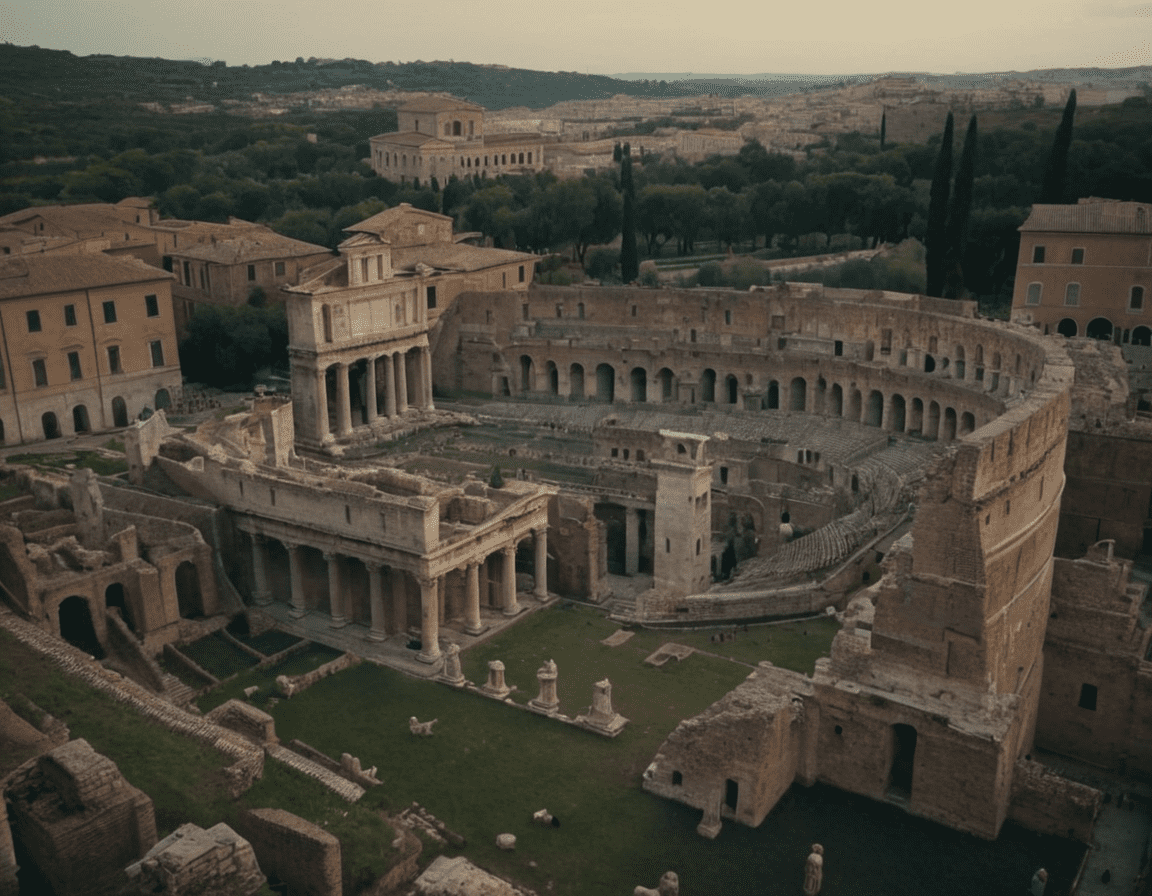
Turin was truly born under Roman rule. After the conquest of Gaul and the Po Valley, Emperor Augustus decided to consolidate control over the region. Around 28 BC, he established a military colony called Iulia Augusta Taurinorum. The mission was clear: to garrison the territory and defend the borders against Alpine tribes.
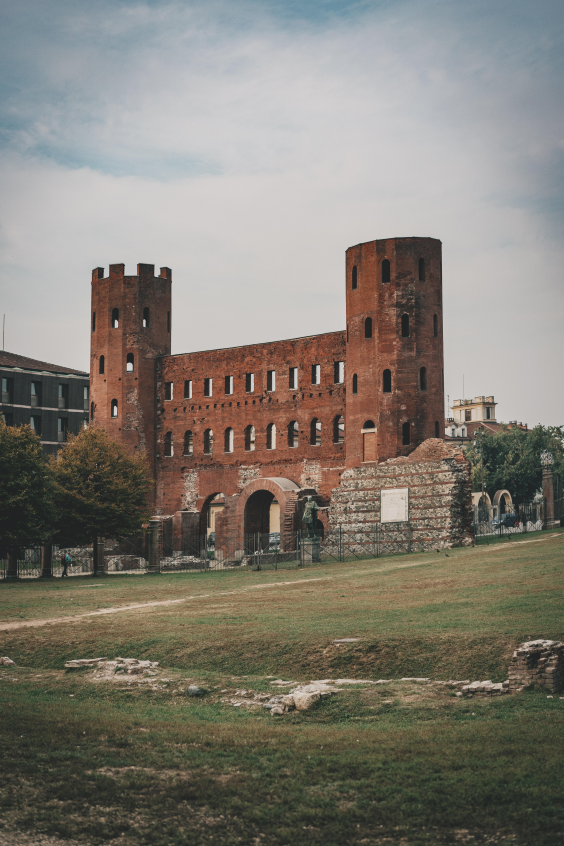
The Romans turned the camp into a fortified city with a classic grid plan (cardo and decumanus). Even today, Turin’s historic center retains this layout: Via Garibaldi (the ancient decumanus) and Porta Palatina (where imposing remnants of the walls still stand) are living proof. The famous Porta Palatina is one of the best-preserved Roman gates in the world.
From castrum to capital
For centuries, Turin remained a minor center of the Empire. After the fall of Rome, it passed through Lombard, Frankish, and episcopal rule. But it was during the Middle Ages that its importance grew, becoming the seat of the Dukes of Savoy. In 1563 it was proclaimed capital of the Duchy of Savoy, and later, in 1861, the first capital of a united Italy. Yet the seed of it all was planted two thousand years ago, when Roman legionaries traced the first orthogonal streets on the land of the Taurini.
Today, walking through Turin means treading on two thousand years of history: beneath your feet, Roman stones still whisper the story of its birth